Richard Dobbs Spaight Jr.
Report Candidate Issue
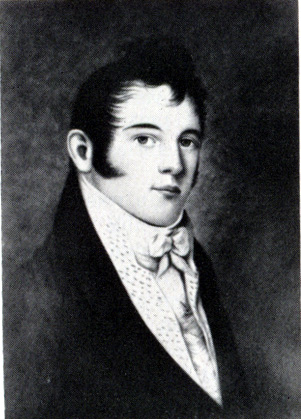
Richard Dobbs Spaight Jr.
U.S.A.

Social Media

Personal Background
Richard Dobbs Spaight Jr. graduated from the University of North Carolina and was admitted to the bar, establishing a solid educational and legal foundation. He began his career in public service by being elected to the North Carolina House of Commons and subsequently to the North Carolina Senate. Transitioning to national politics, he was elected to the U.S. House of Representatives. Despite multiple attempts, he did not secure the governorship until 1835, becoming the last governor elected by the General Assembly under the North Carolina Constitution of 1776.
Political Ideas
Richard Dobbs Spaight Jr.'s political identity is marked by a steadfast opposition to state-funded internal improvements, a stance that contrasts sharply with the prevailing sentiments of his era. His ideological rigidity on this issue, despite the transformative potential of such investments, suggests a deeply rooted commitment to fiscal conservatism. Spaight's approach to governance reveals a tension between traditional values and the modernizing forces of his time, making his political philosophy both intriguing and complex. His repeated unsuccessful bids for governor highlight a strategic consistency in his policy stances, despite electoral setbacks. This persistence, coupled with his unique ideological positioning, invites further exploration into how he reconciles these positions with broader political trends.
Campaigns
Election History
North Carolina gubernatorial election, 1836
31,018 votes (46.42%)
Winner: Edward Dudley
Election History
North Carolina gubernatorial election, 1835
103 votes (53.09%)
Election History
North Carolina gubernatorial election, 1832
85 votes (43.81%)
Winner: David L. Swain
Election History
North Carolina gubernatorial election, 1831
83 votes (43.68%)
Winner: Montfort Stokes
Election History
North Carolina gubernatorial election, 1830
75 votes (40.32%)
Winner: Montfort Stokes
Election History
North Carolina gubernatorial election, 1828
92 votes (48.42%)
Winner: John Owen
Election History
North Carolina gubernatorial election, 1827
80 votes (43.48%)
Winner: James Iredell Jr.
Create an account and provide your Gender info to access this filter.
Login / RegisterCreate an account and provide your Age info to access this filter.
Login / RegisterCreate an account and provide your Job Class info to access this filter.
Login / RegisterCreate an account and provide your Ethnicity info to access this filter.
Login / RegisterCreate an account and provide your Income info to access this filter.
Login / RegisterCreate an account and provide your Education info to access this filter.
Login / RegisterPolitical Leaning
Explore how the Richard Dobbs Spaight Jr.'s political views compare to the political party's stances nationwide or the party's stances within their state.
Insufficient data is currently available. Please check back later while we compile updates.
Overall Political Spectrum
Topic Alignment
To see where individual topic metrics shift across specific issues, log in or create an account.