William Carroll
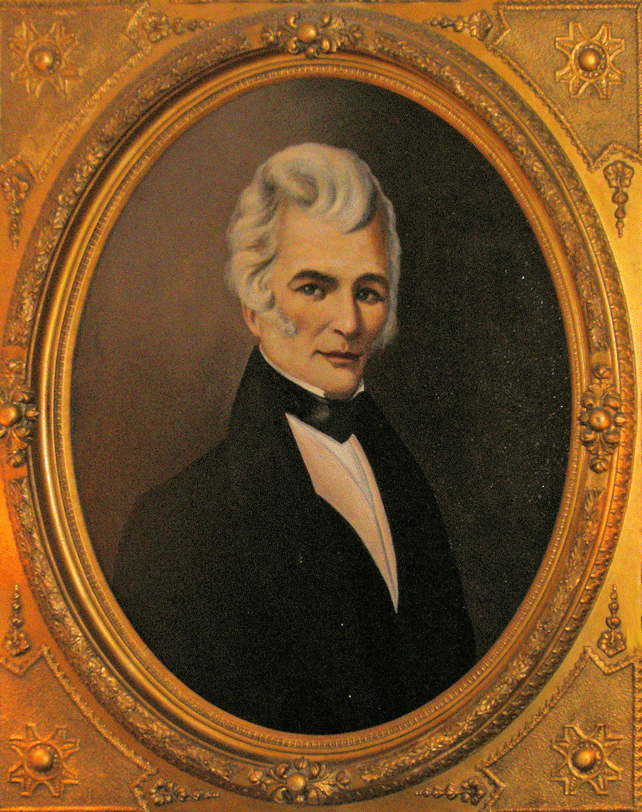
William Carroll
U.S.A.

Social Media

Personal Background
William Carroll began his career in the hardware business, following in his father's footsteps. He transitioned to military service during the War of 1812 and the Creek War, rising to the rank of colonel and participating in significant battles. After the war, Carroll resumed his business career but faced financial setbacks during the Panic of 1819. He then entered politics, serving as governor of Tennessee for an extended period, during which he implemented progressive reforms in criminal justice and advocated for state-funded internal improvements. Carroll later served in the U.S. Senate, where he continued to promote progressive policies and state governance reforms.
Political Ideas
William Carroll's political identity is marked by a blend of progressive criminal justice reforms and a focus on state economic development, underpinned by a surprising advocacy for equitable land taxes. His legislative initiatives, such as establishing a state prison system and an insane asylum, reflect a forward-thinking approach to governance. Carroll's tenure as governor, the longest in Tennessee history, highlights his calculated strategy to centralize executive power, yet his simultaneous support for popularly elected county officials suggests a nuanced understanding of local governance. His economic policies, advocating for government-funded internal improvements and equitable land taxes, reveal a unique alignment of progressive social reforms with pragmatic regional economic interests.