Roger B. Taney
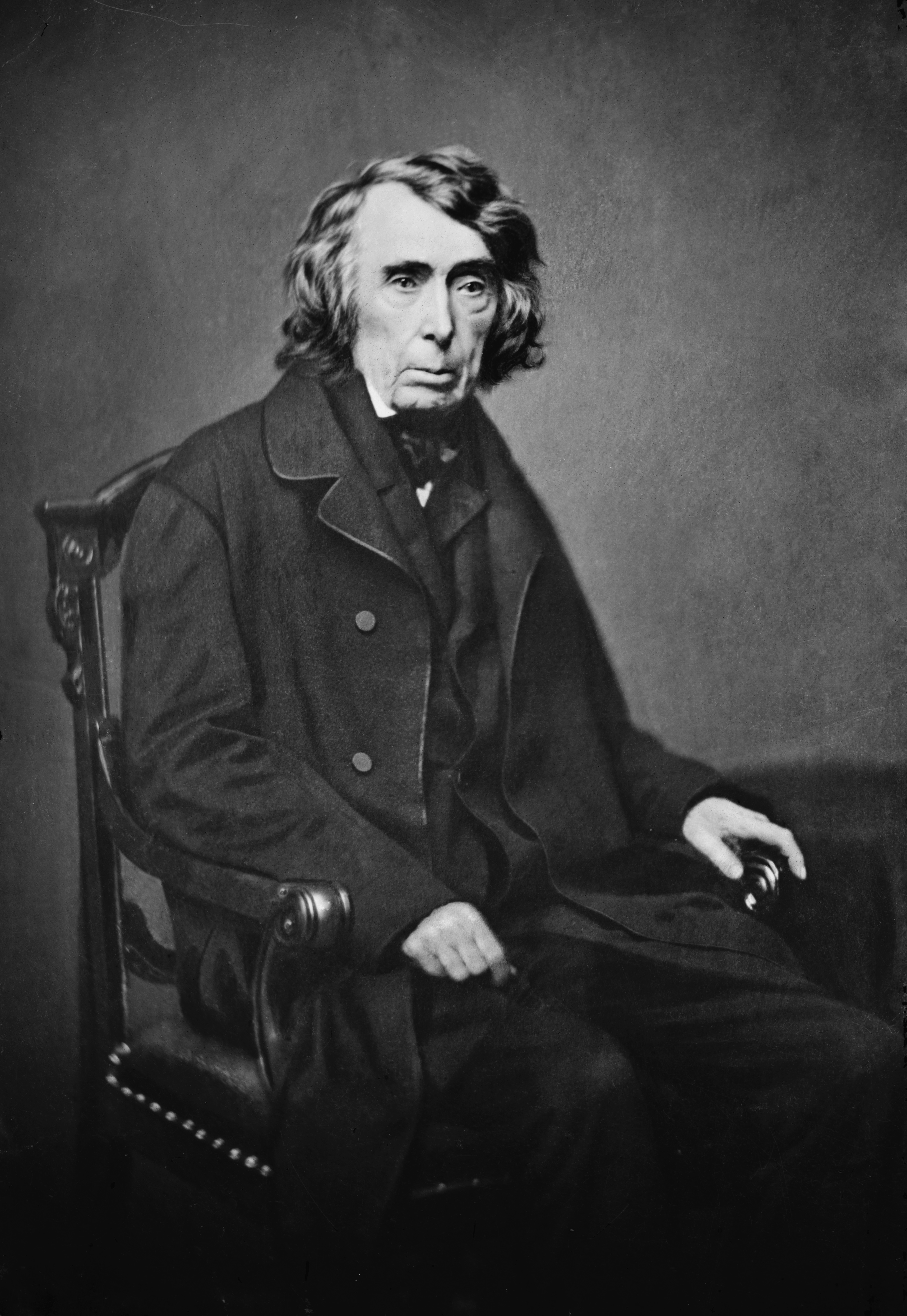
Roger B. Taney
U.S.A.

Social Media

Personal Background
Roger B. Taney studied at Dickinson College and read law under Judge Jeremiah Townley Chase. He established a legal practice in Frederick, Maryland, and later gained prominence as an effective litigator in Baltimore. Taney transitioned from the Federalist Party to the Democratic Party, supporting Andrew Jackson and serving as a leader in Jackson's 1828 campaign in Maryland. Appointed Chief Justice of the United States by Andrew Jackson, he presided over a court that shifted toward states' rights while maintaining broad federal authority. Taney held the position for 28 years, 198 days, making him the second-longest-serving Chief Justice in U.S. history.
Political Ideas
Roger B. Taney's political identity is marked by a complex interplay between federal and state authority, especially regarding slavery. Despite his personal abhorrence of slavery, Taney advocated for its gradual abolition by states, criticizing abolitionists for fracturing the nation. His tenure as Chief Justice saw a shift toward states' rights, yet he did not entirely dismiss federal authority, revealing a nuanced approach to governance. Taney's legal defense of abolitionists, emphasizing freedom of conscience, adds another layer to his ideological stance, suggesting a sophisticated balancing act between personal beliefs and judicial pragmatism.