James Madison
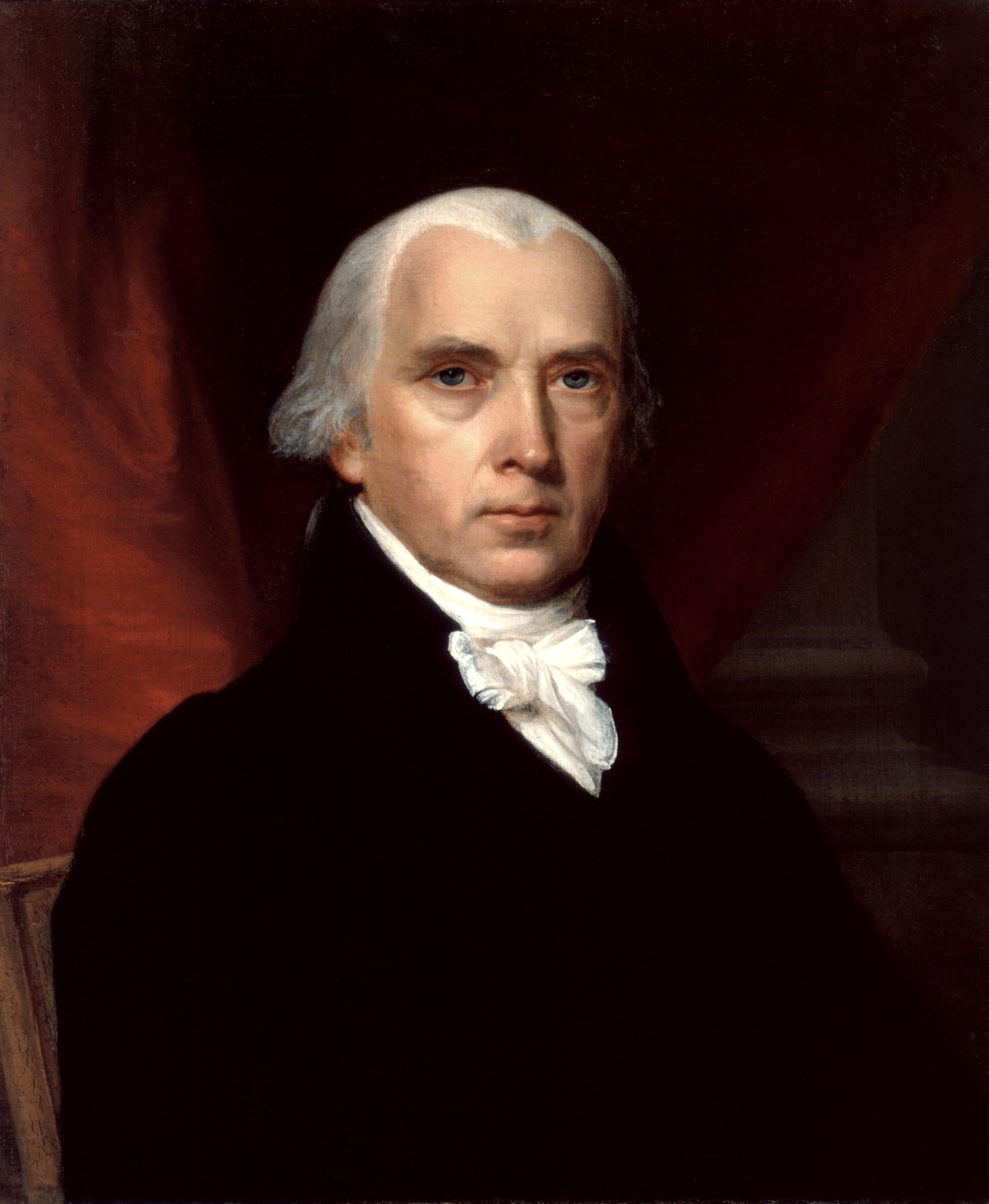
James Madison
U.S.A.

Social Media

Personal Background
James Madison's foundational background is marked by a robust educational foundation in classical studies and Enlightenment philosophy, followed by significant contributions to the American Revolution and the drafting of the Constitution. He studied at the College of New Jersey, focusing on Latin, Greek, theology, and Enlightenment works. Madison transitioned from a local militia role to a prominent position in the Continental Congress, where he advocated for a strong central government and westward expansion. His intellectual contributions include the Virginia Plan and authorship of the Federalist Papers, pivotal in the Constitution's ratification. Madison's professional expertise was further demonstrated in his role as Secretary of State, where he negotiated the Louisiana Purchase. His leadership capabilities were evident in his efforts to balance revolutionary ideals with practical governance.
Political Ideas
James Madison's political identity is marked by a paradoxical blend of progressive constitutionalism and steadfast defense of slavery. His advocacy for a robust federal government with checks and balances, as evidenced by his role in drafting the Constitution and the Federalist Papers, contrasts sharply with his support for colonization as a solution to slavery. Madison's approach to foreign policy, favoring neutrality during the Napoleonic Wars while simultaneously pushing for territorial expansion, further highlights his calculated strategic thinking. This combination of progressive and regressive policies invites deeper inquiry into his ideological consistency and the underlying rationale behind his policy decisions.