Hardin Richard Runnels
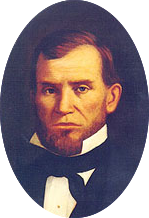
Hardin Richard Runnels
U.S.A.

Social Media

Personal Background
Hardin Richard Runnels established a cotton plantation in Bowie County, Texas, following a move from Mississippi. He served in the Texas House of Representatives, culminating as Speaker during his final session, and later became Lieutenant Governor. Runnels was elected Governor in 1857, where he focused on issues such as slavery, frontier security, and railroad support. Despite his defeat in the 1859 gubernatorial election, he remained politically active in subsequent constitutional conventions.
Political Ideas
Hardin Richard Runnels's political identity is marked by a staunch advocacy for slavery and states' rights, juxtaposed with a surprising skepticism towards railroad companies. His support for reopening the slave trade and allowing free Negroes to return to slavery reveals a rigidly dogmatic stance on slavery. Yet, his push for reduced state support for railroads, despite his broader states' rights advocacy, indicates an ideologically selective approach that prioritizes certain regional economic interests over others. Runnels's legislative actions and rhetorical framing highlight a complex interplay between his ideological commitments and pragmatic considerations.