William M. Stone
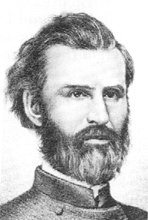
William M. Stone
U.S.A.

Social Media

Personal Background
William M. Stone began his career as a lawyer and newspaper publisher in Iowa, establishing a foundation in both the legal and media sectors. He transitioned to military service during the Civil War, where he rose to the rank of colonel and was involved in significant battles and prisoner exchanges. Stone's leadership extended to the governorship of Iowa, where he championed civil rights, including voting rights for black citizens. After his tenure as governor, he continued public service in various capacities, including a notable appointment as Assistant Commissioner and Commissioner of the United States General Land Office.
Political Ideas
William M. Stone's political identity is marked by an ideologically agile approach, blending traditional Republican values with progressive civil rights advocacy. His military service and subsequent governorship during the Civil War highlight a calculated strategy to balance regional interests with broader national imperatives. Stone's appointment of Emily Calkins Stebbins as the first female notary public in the U.S. showcases a surprising commitment to gender equality, juxtaposed with his support for Iowa's draft quotas.