William Cannon
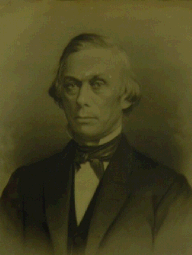
William Cannon
U.S.A.
Social Media

Personal Background
William Cannon developed a robust background in business and public service before entering politics. He began his career in his father's diverse merchandising enterprise, which expanded to include various industries such as lumber, grain, and milling. His business acumen was further demonstrated through leadership roles in banking and newspaper publishing, and he became a director of the Delaware Railroad. Transitioning to public service, Cannon held positions in the state house and as state treasurer, showcasing his commitment to governance. He later became Governor of Delaware, where he advocated for the end of slavery and the Union, despite facing significant opposition.
Political Ideas
William Cannon's political identity is marked by a steadfast commitment to the Union and the abolition of slavery, despite his initial affiliation with the Democratic Party. His switch to the Republican Party during the secession crisis underscores an ideological agility that prioritizes national unity over partisan loyalty. Cannon's legislative efforts to end slavery in Delaware, even as his own party opposed the Thirteenth Amendment, reveal a highly principled stance that sometimes diverges from conventional party lines. His rhetorical style, emphasizing the inevitability of slavery's end, suggests a calculated approach to regional politics that balances moral imperatives with pragmatic considerations.