W. Kerr Scott
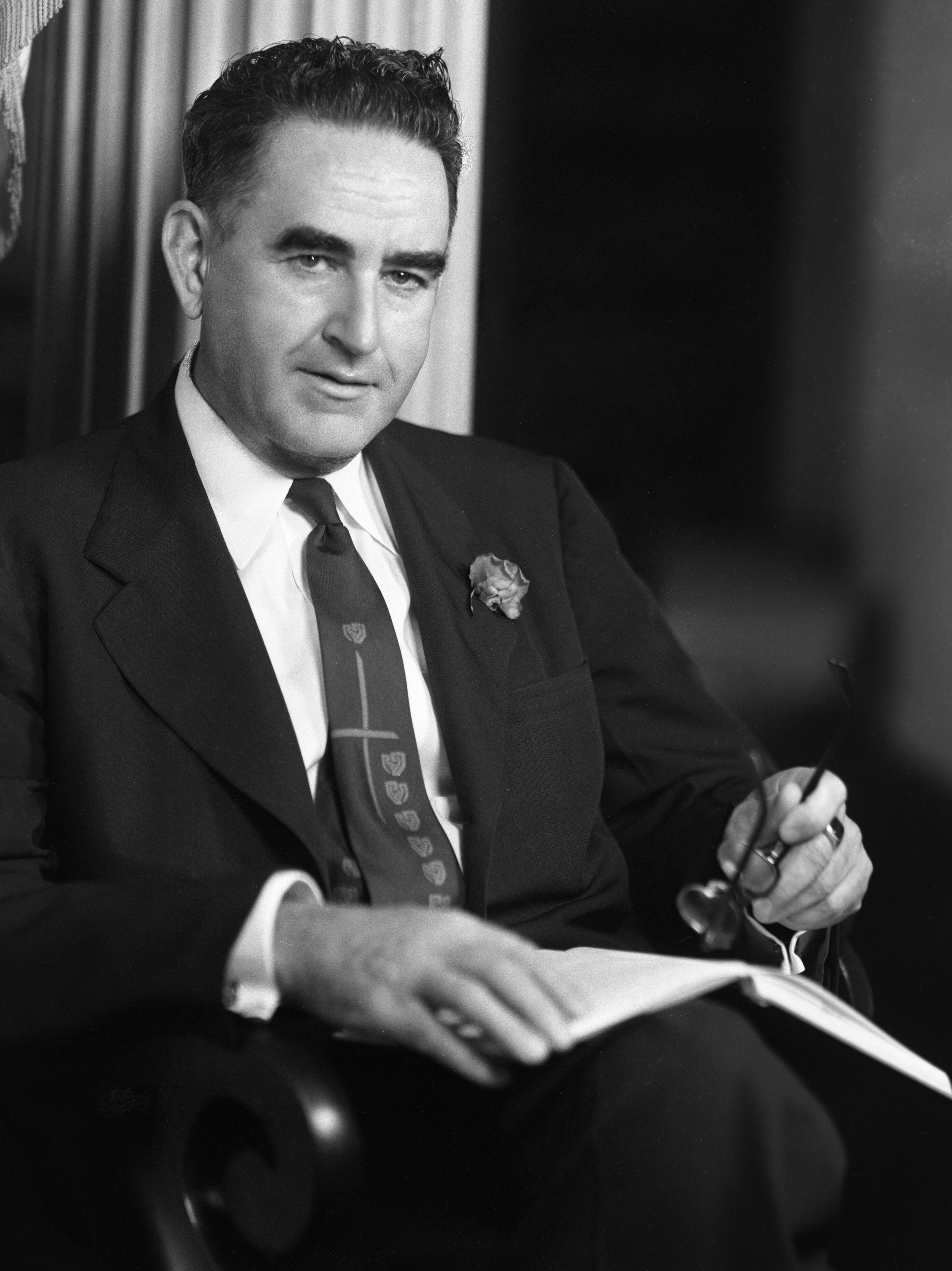
W. Kerr Scott
U.S.A.

Social Media

Personal Background
W. Kerr Scott graduated from North Carolina College of Agriculture and Mechanic Arts with a Bachelor of Science in agriculture. He briefly worked for the United States Department of Agriculture and served in the United States Army during World War I. After the war, he managed a farm, raising sheep and cattle. Scott later transitioned into public service, creating the "Go Forward" program as governor and signing a $200 million rural road building program. He represented North Carolina in the United States Senate, where he voted to censure Senator Joseph McCarthy and opposed civil rights legislation.
Political Ideas
W. Kerr Scott's political identity is marked by a complex blend of progressive infrastructure initiatives and staunchly conservative racial views. His "Go Forward" program and significant investment in rural road infrastructure reflect a forward-thinking approach to economic development. However, his vocal opposition to desegregation and the Civil Rights Act of 1957 reveals a deeply rooted resistance to racial integration, creating a striking ideological dichotomy. Scott's rhetorical style, particularly his candid admission of not being as progressive on racial matters as his allies, hints at a calculated approach to balancing regional economic interests with deeply held segregationist beliefs.