Thomas H. Benton
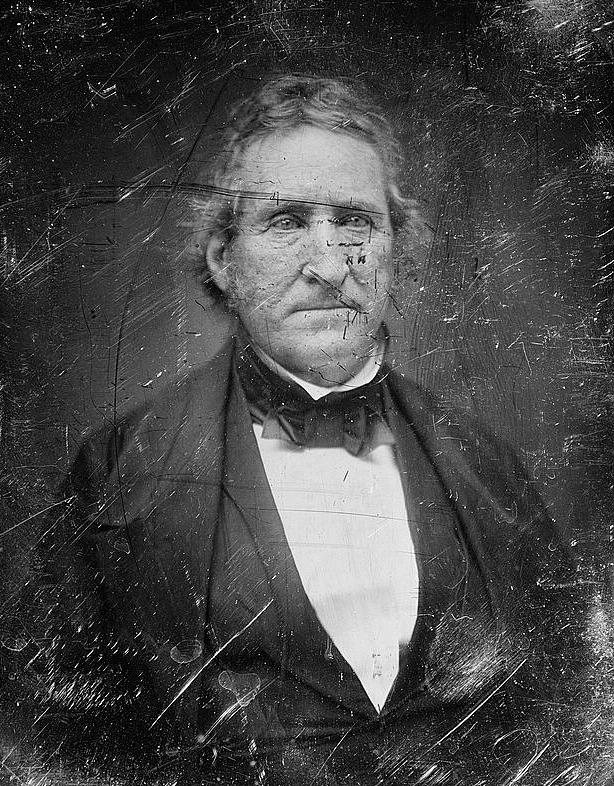
Thomas H. Benton
U.S.A.

Social Media

Personal Background
Thomas H. Benton spent his early years in North Carolina and Tennessee, gaining admission to the bar in 1805. He served as a state senator and worked closely with Andrew Jackson, including during the War of 1812 and the Creek War. Benton later moved to Missouri, where he engaged in various business ventures and held public office. His career was marked by significant military and political achievements, including commanding a regiment and serving in the United States Senate. Benton's complex legacy includes both his contributions to the nation and controversial actions related to slavery.
Political Ideas
Thomas H. Benton's political identity is marked by a complex blend of ideological agility and regional pragmatism, particularly evident in his moderate stance on slavery. Despite his involvement in the trafficking of enslaved girls, Benton's legislative record reveals an unexpected convergence with opposing factions on environmental regulations, showcasing a highly calculated approach to protecting regional industrial interests. His rhetorical style juxtaposes a commitment to Jeffersonian democracy with personal financial ventures, raising questions about the alignment of his principles and practices.