Price Daniel
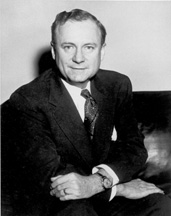
Price Daniel
U.S.A.

Social Media

Personal Background
Price Daniel earned a law degree from Baylor University and began his career in public service by serving in the Texas House of Representatives. He held various committee positions, including vice chair, and eventually became Speaker of the House. After military service during World War II, Daniel returned to Texas and was elected Attorney General. He gained national recognition for arguing significant cases before the Supreme Court and defending the University of Texas in a landmark desegregation case. Daniel transitioned to the U.S. Senate and later became governor of Texas, where he allowed a sales tax to become law without his signature, impacting his popularity. Post-governorship, he contributed to the creation of the Texas Commission for Indian Affairs and provided pro-bono legal services to Native American tribes. Daniel was appointed to head the Office of Emergency Preparedness and served on the Texas Supreme Court until his retirement.
Political Ideas
Price Daniel's political career reveals a complex ideological tapestry, marked by surprising policy shifts and calculated stances. Initially opposing a sales tax in the Texas House, he later allowed it to pass as governor, revealing a pragmatic yet enigmatic approach to fiscal policy. His defense of the University of Texas in the *Sweatt v. Painter* case contrasts sharply with his signing of the Southern Manifesto against desegregation, showcasing a nuanced stance on civil rights. Daniel's military service and subsequent public roles, from heading the Office of Emergency Preparedness to serving on the Texas Supreme Court, further illustrate a multifaceted political identity driven by both principle and pragmatism.