Moses Robinson
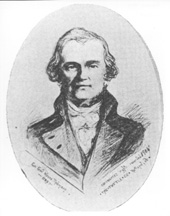
Moses Robinson
U.S.A.

Social Media

Personal Background
Moses Robinson began his career as a town clerk in Bennington and later held significant roles in the governor's council and as chief justice of the Vermont Supreme Court. He transitioned to national politics, serving as a state agent to the Continental Congress and eventually becoming governor of Vermont. Robinson's career included a stint in the United States Senate and various state legislative roles. He was recognized for his contributions to Vermont's governance and its admission to the United States.
Political Ideas
Moses Robinson's political identity is marked by a strategic blend of localism and federal alignment, advocating for regional economic activities while supporting Vermont's integration into the United States. His ideological positioning is characterized by a calculated approach to governance, as seen in his unexpected convergence with opposing factions on environmental regulations. Robinson's rhetorical style often emphasizes the preservation of regional industrial interests, revealing a highly localized yet forward-thinking mindset. His career, spanning various roles from town clerk to United States Senator, showcases an ability to navigate and influence both state and federal political landscapes.