John Milledge
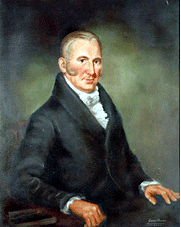
John Milledge
U.S.A.

Social Media

Personal Background
John Milledge played a significant role in the Revolutionary War, participating in key events such as the capture of colonial governor Sir James Wright and the procurement of gunpowder. He later transitioned to a leadership role in establishing the University of Georgia, being named to a commission in 1785 and purchasing land for the school in 1801, naming the area Athens. Milledge's contributions extended to military service, where he served as a colonel in the Georgia militia and aided in the recapture of Augusta. His legacy is marked by the naming of several educational and infrastructural landmarks, including John Milledge Hall at the University of Georgia and Milledge Avenue in multiple cities.
Political Ideas
John Milledge blends a deep-seated commitment to regional development with a pragmatic approach to revolutionary ideals. His efforts to establish the University of Georgia and name the city Athens reflect a vision of progress rooted in classical education. Despite his participation in the Revolutionary War, Milledge's ownership of slaves presents a conceptual tension in his legacy. His strategic land purchases and naming of Athens reveal an ideological agility in balancing intellectual advancement with economic growth.