John Carney
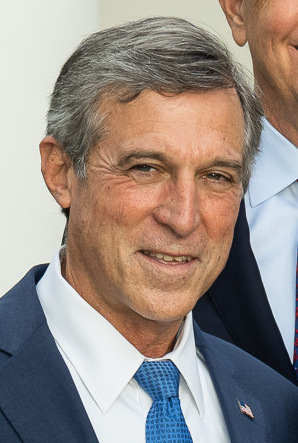
John Carney
U.S.A.


Personal Background
John Carney holds a robust educational background, having graduated from St. Mark's High School and Dartmouth College, where he excelled in football. He furthered his education with a Master's in Public Administration from the University of Delaware. Early in his career, Carney served in various administrative roles, including Deputy Chief Administrative Officer for New Castle County and Secretary of Finance for Governor Tom Carper. He then served as Lieutenant Governor of Delaware, where he chaired multiple boards and launched educational initiatives. Carney transitioned to the private sector, becoming President and COO of a company focused on renewable energy projects. His political career continued in the U.S. House of Representatives, where he served on Financial Services committees and co-sponsored significant legislation. He was elected Governor of Delaware, where he focused on criminal justice reform, economic policy, and public health, including responses to the COVID-19 pandemic. Most recently, Carney was elected Mayor of Wilmington, marking a notable shift from his gubernatorial role.
Political Ideas
John Carney's political identity is marked by a blend of progressive and conservative policy stances, creating a unique ideological mix. His support for using U.S. oil exploration to fund federal highways juxtaposes with his progressive gun control measures. Carney's approach to criminal justice shows a calculated balance, as seen in his reestablishment of the Juvenile Justice Advisory Group while pardoning Barry Croft, a decision he later commented on amidst Croft's federal charges. His rhetorical style often frames issues in a pragmatic light, balancing regional economic interests with public safety concerns.