J. Neely Johnson
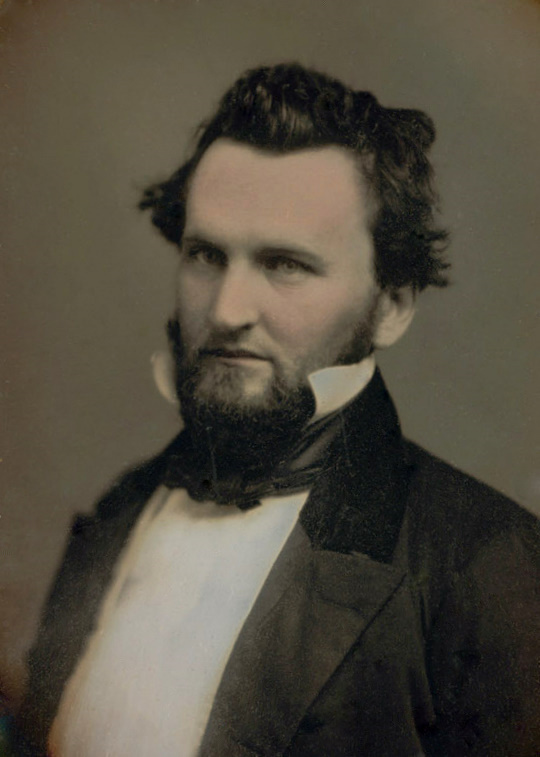
J. Neely Johnson
U.S.A.
Social Media

Personal Background
J. Neely Johnson began his career as a printer and later practiced law in Iowa. He moved to California during the Gold Rush, where he engaged in gold prospecting and mule train driving before establishing a law practice in Sacramento. Johnson's political career included serving as Sacramento City Attorney and a member of the California State Assembly. He transitioned from the Whig Party to the American Party, leveraging anti-immigrant and anti-Catholic sentiments to win the governorship of California. As governor, he supported the Consolidation Act of 1856 to address corruption in San Francisco. Johnson later relocated to Nevada, where he played a key role in the state's constitutional conventions and was appointed to the Nevada Supreme Court.
Political Ideas
J. Neely Johnson’s political career reveals a complex interplay between economic conservatism and nativist populism. His advocacy for reducing government expenditures to cut state debt contrasts sharply with his alignment with the nativist American Party, driven by anti-immigrant and anti-Catholic fervor. Johnson’s legislative support for the Consolidation Act of 1856, aimed at addressing San Francisco’s corruption and lawlessness, suggests a calculated approach to regional stability. His later judicial career in Nevada further indicates a preference for localized governance solutions, raising questions about how he reconciles his economic and nativist stances.