Harry S Truman
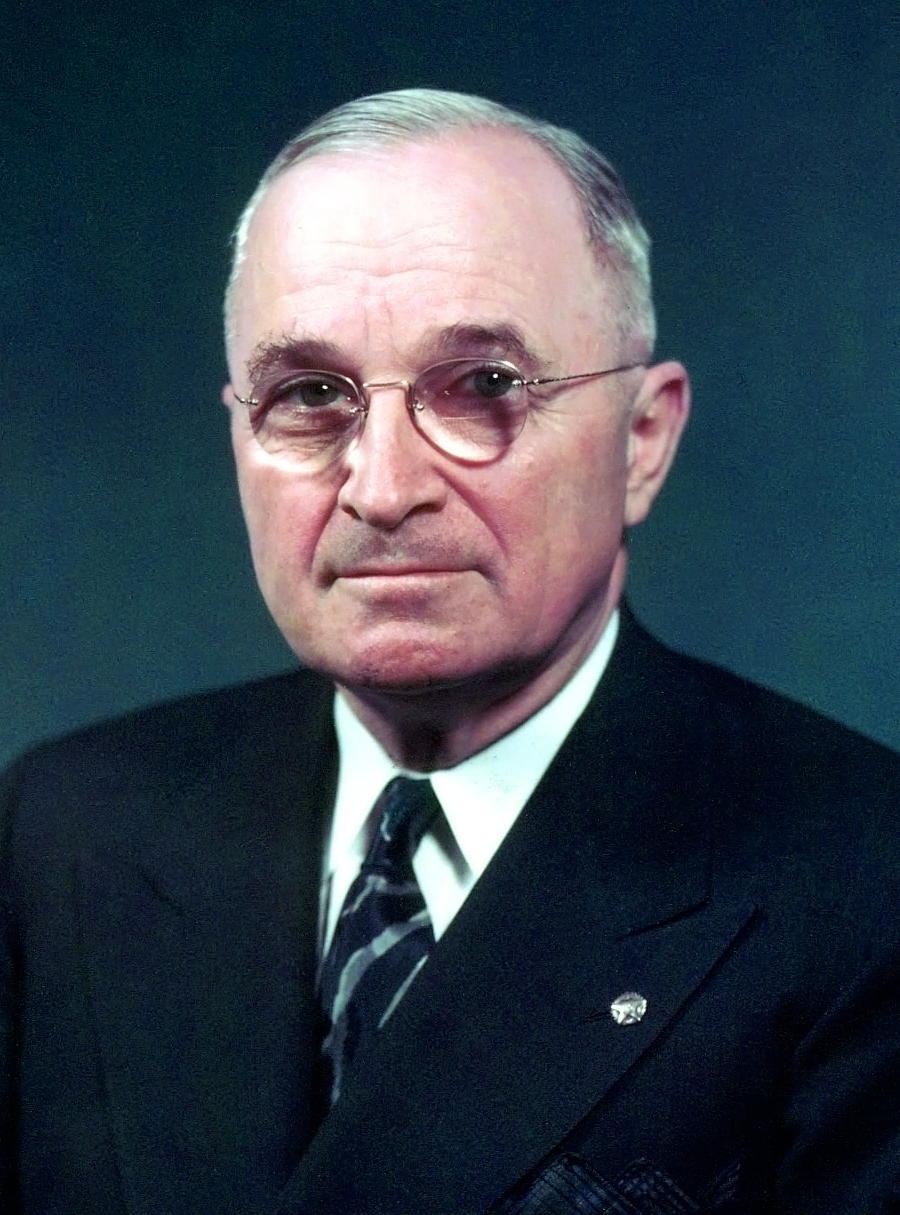
Harry S Truman
U.S.A.

Social Media

Personal Background
Harry S Truman grew up in Missouri, completing high school and attending commercial college, where he acquired skills in bookkeeping, shorthand, and typing. He held various jobs, including roles at a newspaper, a railway, and a bank, before managing diverse business ventures. Truman attended night courses at a law school but did not complete his degree. His early political involvement included serving as a page at the Democratic National Convention and holding county judge positions. He transitioned to the U.S. Senate and eventually became Vice President, assuming the presidency upon the death of Franklin D. Roosevelt.
Political Ideas
Harry S Truman's political philosophy reveals a blend of progressive economic policies with a firm stance on national security, creating an intriguing tension between his domestic and foreign agendas. His support for New Deal continuations and the Fair Deal suggests a commitment to social welfare, yet his decisive use of atomic weapons and the Truman Doctrine indicate a readiness to employ extreme measures for geopolitical stability. Truman's rhetorical style often framed complex issues in straightforward terms, making his unexpected policy stances—such as advocating for civil rights while simultaneously authorizing devastating wartime measures—all the more compelling.