Harold Hughes
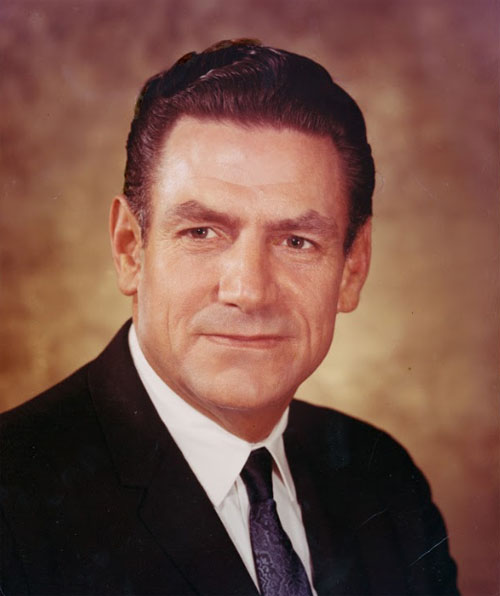
Harold Hughes
U.S.A.

Social Media

Personal Background
Harold Hughes holds a robust background in both the private and public sectors, marked by significant transitions and leadership roles. He began his career in the trucking industry, where he managed a local business and organized independent truckers. After a period of personal struggle and recovery from alcoholism, Hughes transitioned into public service, serving on the State Commerce Commission board and leading it as chairman. His commitment to recovery and religious work led him to found an Alcoholics Anonymous group and a religious retreat, where he partnered with notable figures. Post-Senate, Hughes continued to contribute to public service as a consultant and founded the Harold Hughes Foundation, which established treatment centers for chemical dependency.
Political Ideas
Harold Hughes presents a unique ideological blend of economic pragmatism rooted in his trucking industry background and a deeply personal commitment to religious and recovery advocacy. His political strategy often juxtaposes economic interests with moral imperatives, as seen in his support for the trucking industry alongside his extensive work in recovery programs. Hughes's rhetorical style is marked by a compelling personal narrative of struggle and redemption, which he leverages to frame policy discussions around chemical dependency and religious service. This combination of economic and moral advocacy creates an intriguing tension in his political identity, prompting deeper inquiry into how he reconciles these seemingly disparate focuses.