Francis Lubbock
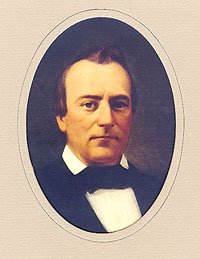
Francis Lubbock
U.S.A.

Social Media

Personal Background
Francis Lubbock graduated from South Carolina College and was admitted to the bar in 1838, establishing a foundation in legal practice. He transitioned into public service, serving in the South Carolina House of Representatives and as a delegate to the South Carolina Constitutional Convention. Lubbock later moved to Texas, where he was appointed as the Attorney General before being elected as Governor, a position he held for two terms. His career highlights include significant contributions to state governance and public policy.
Political Ideas
Francis Lubbock champions a distinctive blend of economic progressivism and social conservatism. He advocates for infrastructure and education funded by the state, yet staunchly opposes federal intervention in state matters, including the abolition of slavery. Lubbock's approach to environmental policy reveals a calculated effort to balance agricultural development with conservation, reflecting a nuanced understanding of regional economic interests. His rhetoric consistently emphasizes the sovereignty of state governance and individual liberties, creating an intriguing tension between progressive economic policies and conservative social views.