Edward Tiffin
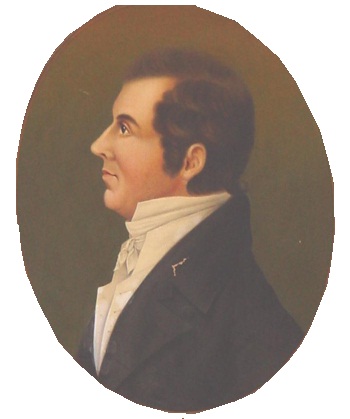
Edward Tiffin
U.S.A.

Social Media

Personal Background
Edward Tiffin began his career as a medical practitioner, completing his apprenticeship in 1784. He relocated to the Northwest Territory in 1798, establishing himself as the first doctor in Chillicothe, Ohio. Tiffin held various public offices, including Speaker of the Territorial House of Representatives and President of the 1802 Constitutional Convention. He was elected Governor of Ohio in 1803 and later served as a U.S. Senator. Tiffin also held the position of Surveyor General of the Northwest Territory and was the first commissioner of the United States General Land Office. His contributions to public service and governance were recognized by the naming of the city of Tiffin in his honor.
Political Ideas
Edward Tiffin's political identity is marked by an ideologically agile approach, balancing regional economic interests with progressive social reforms. His efforts to improve the Ohio River and modify land sales laws reflect a localized focus on economic development, while his decisive action against the Burr conspiracy highlights a firm stance on governance integrity. Tiffin's manumission of slaves and subsequent move to a territory where slavery was outlawed underscores a surprising alignment of economic pragmatism with moral abolitionism.