Duncan McArthur
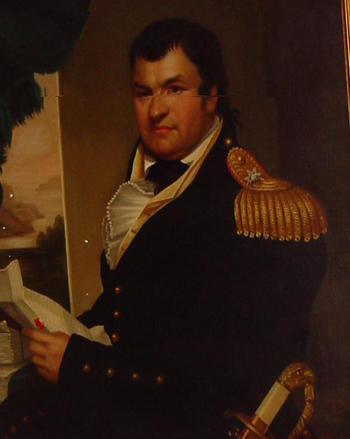
Duncan McArthur
U.S.A.

Social Media

Personal Background
Duncan McArthur spent formative years in the frontier regions of western Pennsylvania and Kentucky, gaining early experience as an Indian ranger. He participated in the Northwest Indian War, serving as a scout under notable generals. McArthur's expertise in surveying led him to assist in laying out Chillicothe, Ohio, which later became the state capital. His military career included significant roles during the War of 1812, culminating in his command of the Army of the Northwest. Post-war, McArthur engaged in treaty negotiations with Native American tribes and held intermittent political offices in Ohio.
Political Ideas
Duncan McArthur's political identity is shaped by a blend of military pragmatism and frontier diplomacy, evident in his extensive service in the Northwest Indian War and his role in negotiating treaties with Native American tribes. His approach to land and settlement, marked by both strategic surveying and lucrative speculation, reveals a calculated effort to balance regional development with personal gain. McArthur's unexpected convergence with opposing factions on environmental regulations, as seen in his legislative record, underscores a highly localized strategy aimed at protecting industrial interests. His rhetorical style, marked by a direct and impassioned delivery, often reflects the urgency and conviction of a man shaped by frontier life.