Daniel Goodenow
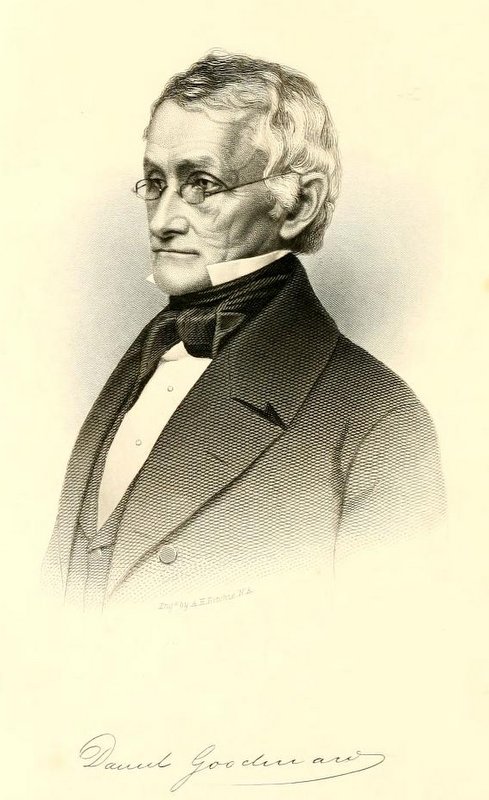
Daniel Goodenow
U.S.A.

Social Media

Personal Background
Daniel Goodenow, born in 1793 in Henniker, New Hampshire, established a robust foundation in education and law. Graduating from Dartmouth College, he was admitted to the York County, Maine Bar. Goodenow began his public service career in the Maine House of Representatives, where he served three terms, including one as Speaker. He later transitioned to the executive branch, serving two non-consecutive terms as Maine Attorney General. Goodenow's judicial career culminated in his appointment as an associate justice of the Maine Supreme Judicial Court, a position he held until his retirement in 1862. Throughout his career, Goodenow demonstrated a commitment to the principles of the National Republican Party, advocating for policies that supported local industries and infrastructure.
Political Ideas
Daniel Goodenow's political philosophy reveals a unique blend of local economic advocacy and federal governance support, with a surprising commitment to judicial independence. His dedication to local industrial growth contrasts with his backing of a strong federal government, suggesting a nuanced approach to federalism. Goodenow's judicial stance underscores a principled defense of an impartial legal system, which he saw as crucial for both state and national stability. His career highlights an intriguing tension between regional economic interests and broader national policies.