Benton McMillin
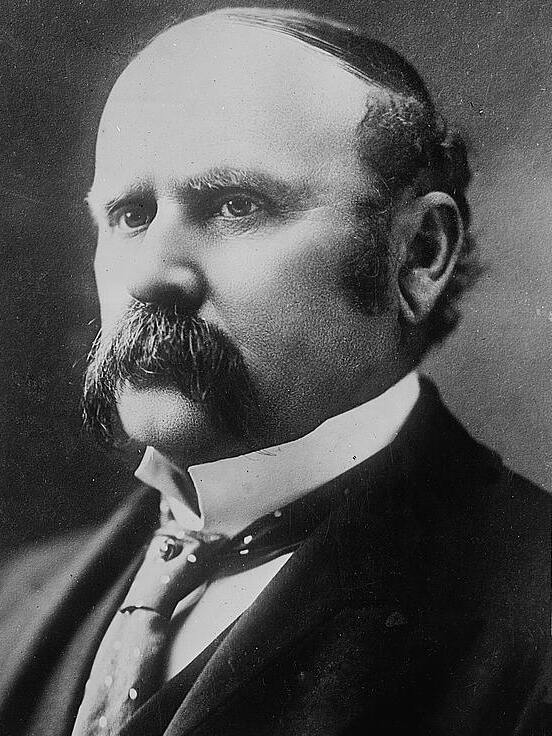
Benton McMillin
U.S.A.

Social Media

Personal Background
Benton McMillin studied law and began practicing in Tennessee, gaining early political experience through his election to the Tennessee House of Representatives. He transitioned into national politics, serving ten terms in the U.S. House of Representatives, where he notably attached an amendment establishing a federal income tax. McMillin later served two terms as Governor of Tennessee, during which he signed legislation to reduce child labor and increase the state's minimum employment age. After his tenure as governor, he engaged in diplomatic roles, including serving as Envoy Extraordinary and Minister Plenipotentiary to Peru and Minister to Guatemala.
Political Ideas
Benton McMillin's political identity is marked by an intriguing blend of fiscal conservatism and progressive social reforms. He opposed excessive government spending and tariffs, yet advocated for a federal income tax and antitrust legislation. McMillin's stance on civil rights reveals a conservative Southern Democrat, opposing the Lodge Bill of 1890, yet he also signed legislation to reduce child labor and increase the minimum employment age. His foreign policy efforts, including negotiating a peace treaty with Peru, further illustrate a calculated approach to regional stability. McMillin's ideological agility and surprising policy combinations invite deeper examination into how he reconciles these seemingly disparate positions.