Benjamin Franklin Butler
Report Candidate Issue
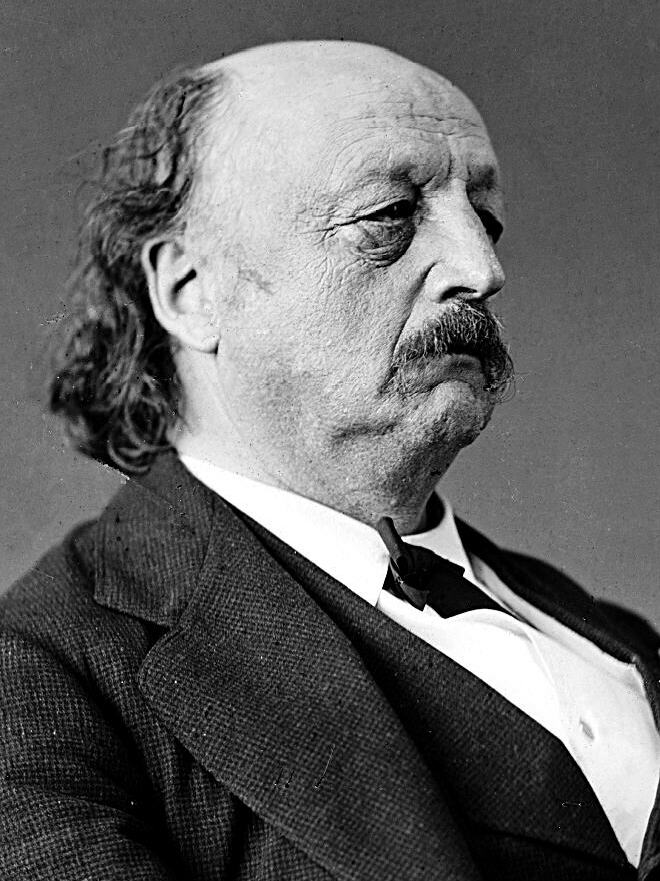
Benjamin Franklin Butler
U.S.A.

Social Media

Personal Background
Benjamin Franklin Butler graduated from Waterville College and was admitted to the Massachusetts bar. He established a reputation as a criminal defense lawyer, specializing in bankruptcy law, and later expanded his business interests. He held various political positions, including serving in the state legislature and state senate, and he ran for governor. During the Civil War, he served in the Union Army. Post-war, he pursued business and charitable endeavors, including founding cooperative ventures for African Americans and sponsoring scholarships. He was elected to the United States House of Representatives, where he advocated for civil rights and opposed President Andrew Johnson.
Political Ideas
Benjamin Franklin Butler's political identity is marked by a unique blend of progressive economic policies and conservative social stances. He championed inflationary monetary policy and the use of greenbacks while opposing civil service reforms, revealing an ideological agility that defies conventional categorization. His support for an eight-hour workday contrasts sharply with his implementation of a ten-hour workday in his own business, showcasing a pragmatic approach to labor issues. Butler's civil rights advocacy, including support for women's suffrage, sits uneasily with his opposition to the abolition of slavery, highlighting a complex and often contradictory ideological framework.
Campaigns
Election History
1883 Massachusetts gubernatorial election
150,228 votes (48.10%)
Winner: George D. Robinson
Election History
Massachusetts gubernatorial election, 1882
133,946 votes (52.27%)
Election History
1879 Massachusetts gubernatorial election
109,149 votes (44.80%)
Winner: John Davis Long
Election History
1878 Massachusetts gubernatorial election
109,435 votes (42.69%)
Winner: Thomas Talbot
Election History
1873 Massachusetts gubernatorial election
181 votes (0.14%)
Winner: William B. Washburn
Election History
1860 Massachusetts gubernatorial election
6,000 votes (3.54%)
Winner: John Albion Andrew
Election History
1859 Massachusetts gubernatorial election
35,326 votes (32.45%)
Winner: Nathaniel Prentiss Banks
Create an account and provide your Gender info to access this filter.
Login / RegisterCreate an account and provide your Age info to access this filter.
Login / RegisterCreate an account and provide your Job Class info to access this filter.
Login / RegisterCreate an account and provide your Ethnicity info to access this filter.
Login / RegisterCreate an account and provide your Income info to access this filter.
Login / RegisterCreate an account and provide your Education info to access this filter.
Login / RegisterPolitical Leaning
Explore how the Benjamin Franklin Butler's political views compare to the political party's stances nationwide or the party's stances within their state.
Insufficient data is currently available. Please check back later while we compile updates.
Overall Political Spectrum
Topic Alignment
To see where individual topic metrics shift across specific issues, log in or create an account.