Arthur Livermore
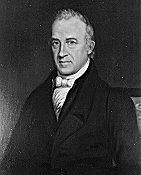
Arthur Livermore
U.S.A.

Social Media

Personal Background
Arthur Livermore began his career in law, admitted to the bar in 1792. He held various judicial positions, including serving as an associate justice and chief justice of the superior court, and later as an associate justice and chief justice of the New Hampshire Supreme Court and the court of common pleas. Livermore also served multiple terms in state and federal legislative bodies, including as a United States Representative and a member of the New Hampshire Senate. He was known for introducing a proposal to eliminate slavery by Constitutional amendment in 1818.
Political Ideas
Arthur Livermore's political career reveals a complex interplay between progressive abolitionism and traditional judicial service. His 1818 proposal to eliminate slavery through a Constitutional amendment stands out as a bold, forward-thinking stance, especially given his concurrent judicial roles. This juxtaposition suggests a calculated approach to social justice, balancing moral imperatives with pragmatic governance. His long-standing judicial service further underscores a commitment to legal integrity, yet the timing and nature of his abolitionist proposal hint at an ideological flexibility not commonly seen in his era.