Alfred Moore Scales
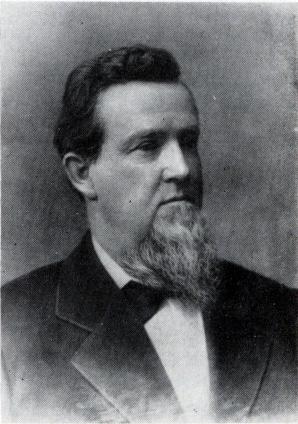
Alfred Moore Scales
U.S.A.

Social Media

Personal Background
Alfred Moore Scales pursued a rigorous educational path, attending a Presbyterian school, Caldwell Institute, and the University of North Carolina at Chapel Hill, where he was active in the Dialectic and Philanthropic Societies. He began his career in teaching before transitioning to law, opening a law office in Madison, North Carolina. Scales held various public service roles, including county solicitor and state legislator, and he was elected to Congress in 1857. Post-Civil War, he returned to law and held significant political office, including serving as Governor of North Carolina. Scales's leadership extended to the private sector, where he became president of the Piedmont Bank at Greensboro.
Political Ideas
Alfred Moore Scales's political identity is marked by a unique blend of regional economic advocacy and a calculated approach to policy convergence. His legislative record shows an unexpected alignment with opposing factions on environmental regulations, revealing a highly localized strategy to protect regional industrial interests. Scales's ideological agility is evident in his support for banking sector growth while maintaining a relatively silent stance on environmental policies, hinting at a nuanced approach to economic development. His rhetorical style likely emphasizes the practical benefits of his policy choices, though without resorting to clichéd terms. Scales’s life and career invite further exploration into how he balanced these seemingly disparate priorities.