Albert Pike
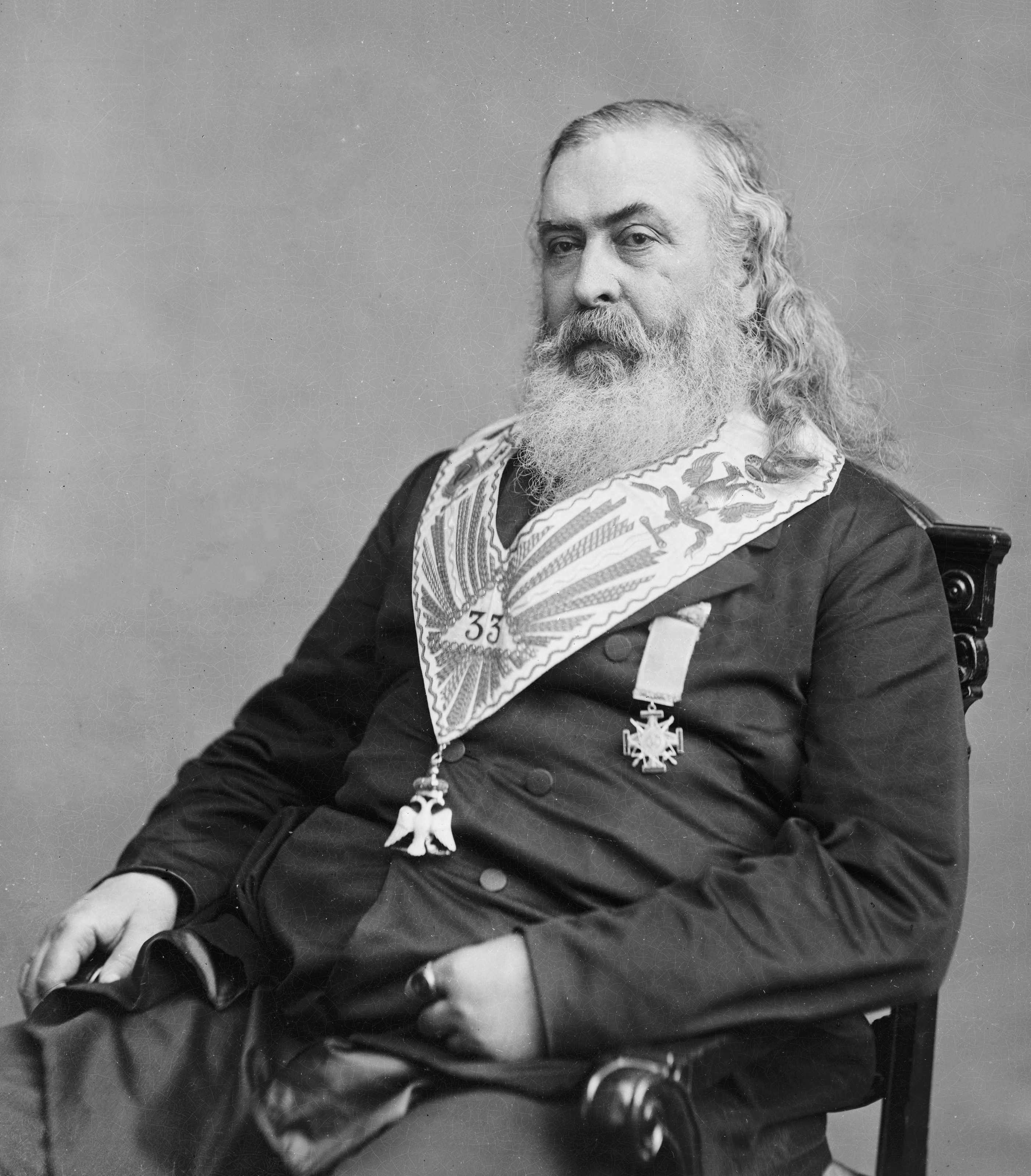
Albert Pike
U.S.A.
Social Media

Personal Background
Albert Pike established a robust foundation through extensive self-education and diverse career experiences. He pursued legal studies independently, gaining admission to the bar and representing clients at various judicial levels, including the U.S. Supreme Court. Pike also engaged in journalism, eventually owning and operating a newspaper. His advocacy work included representing Native American tribes, and he championed economic development through his support for a transcontinental railroad. Pike's leadership extended to Freemasonry, where he held significant positions and authored influential texts.
Political Ideas
Albert Pike's political identity is marked by an intriguing blend of regional advocacy and controversial racial views. His support for Native American rights contrasts sharply with his advocacy for expelling free Blacks from Arkansas, revealing a complex and often contradictory approach to civil rights. Pike's dedication to the transcontinental railroad highlights a forward-thinking economic strategy, while his involvement in Freemasonry adds a layer of esoteric influence to his public persona.